Company knowledge, answered.
Ouroboros OS is one box that runs on your hardware, inside your building. Employees ask in Arabic or English and get cited answers from the documents they're cleared to see. An agent takes on multi-step work and stops for approval before anything leaves.
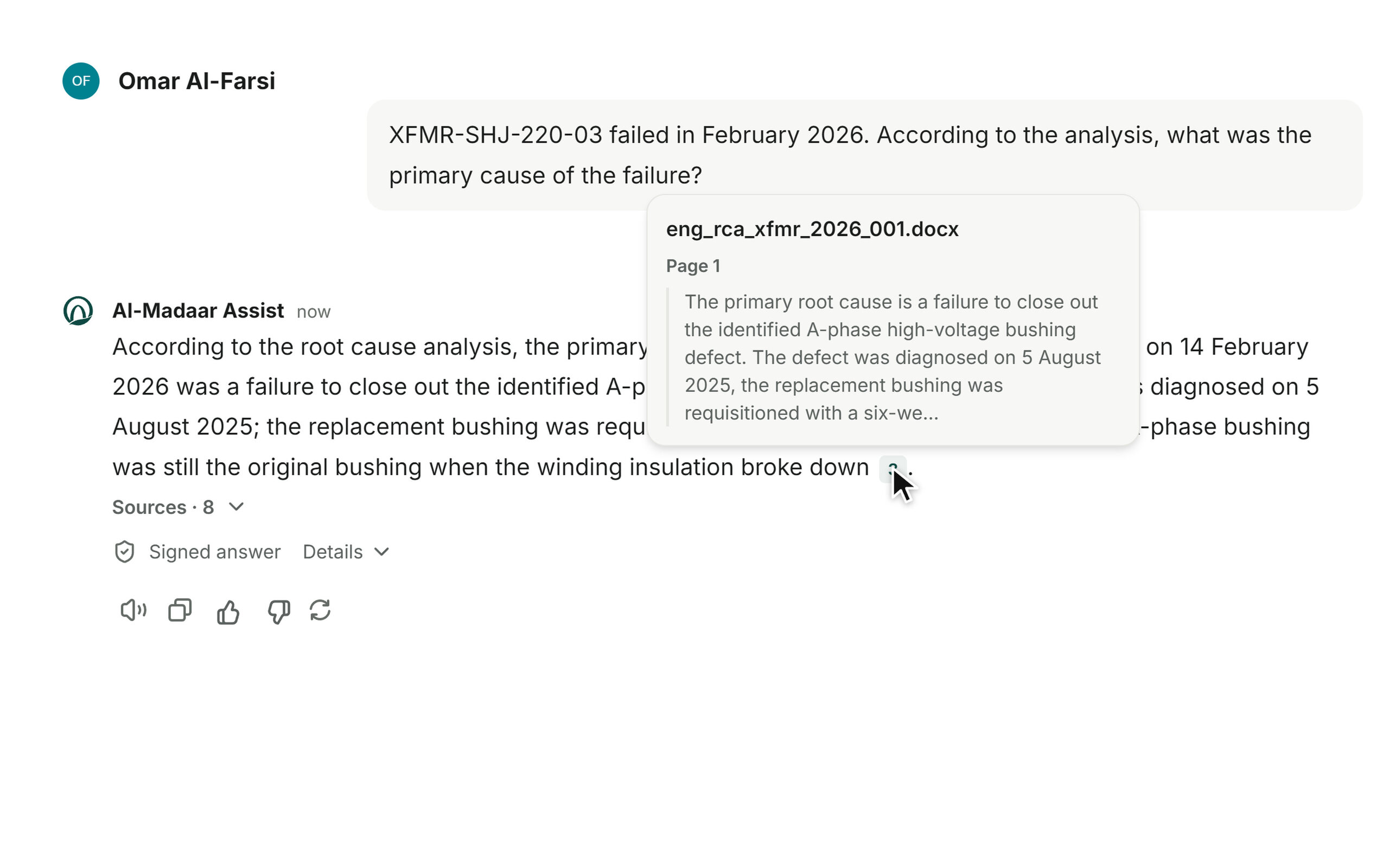
Hover or tap a citation to see the passage it came from.Product still. The demo company is fictional.
Every answer cites its source.
Chat answers in Arabic or English. Company facts come only from documents the employee is allowed to read. Arabic is fully right-to-left.
- Answers cite their sources. Hover or tap a citation to see the passage behind the claim.
- If the documents an employee may read don't hold the answer, it refuses with one fixed sentence, “Insufficient authorized context.”, instead of guessing. On screen, the employee sees a “Not enough evidence to answer” notice that says why.
- Every answer is signed and written to a ledger. An auditor can re-check any receipt later.
- Reads scanned documents and spreadsheets. It also builds a knowledge graph, with one of our own models deciding which links go into it; the graph isn't used in answers yet.
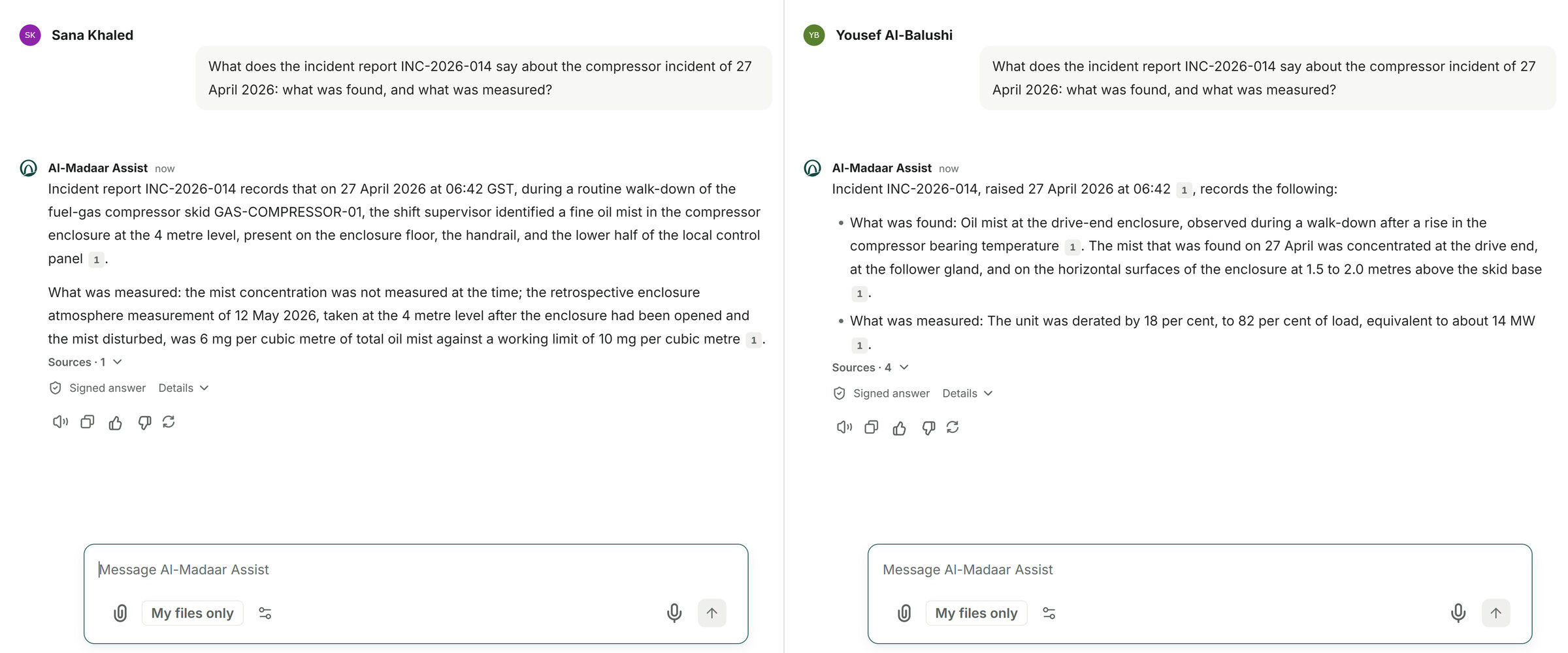
Same question, two clearances. Standard clearance gets an answer built only from the documents they may read.
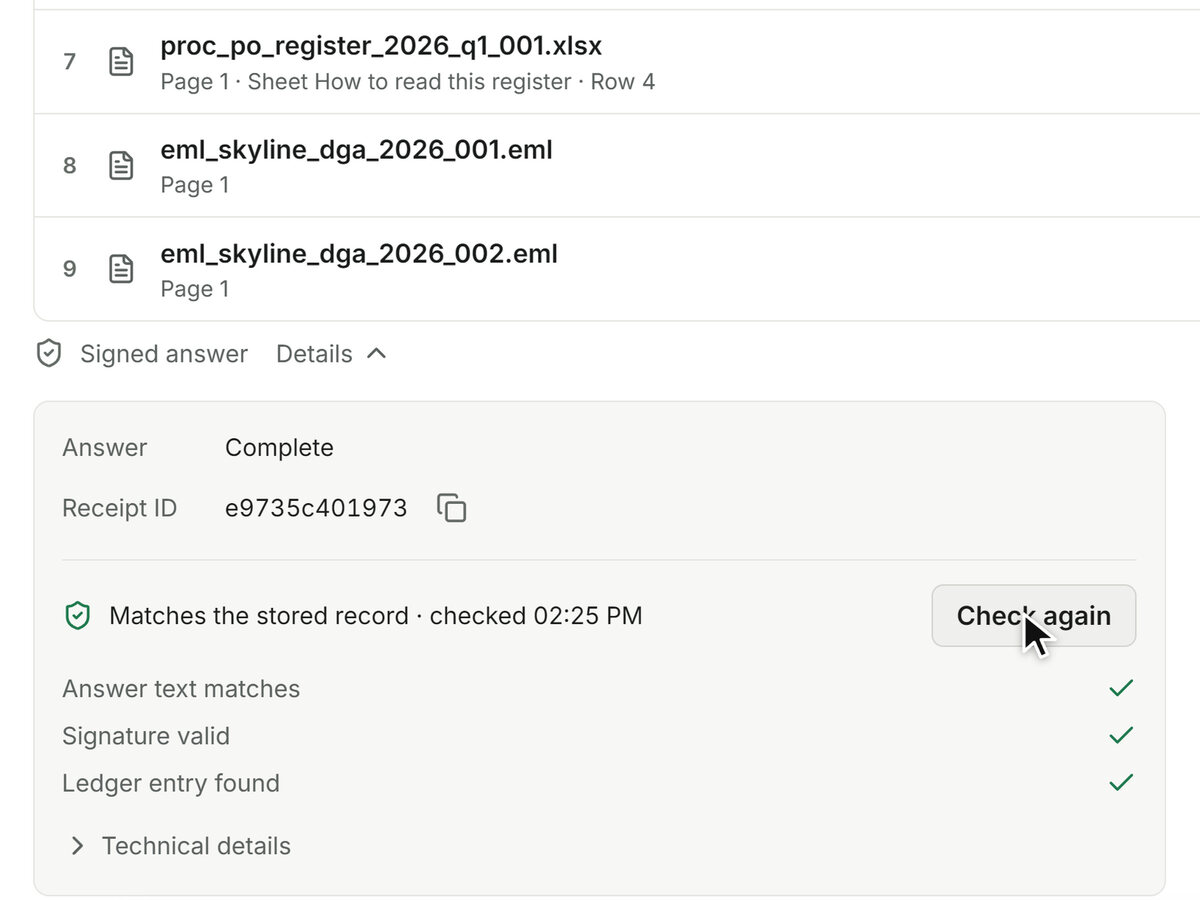
A signed answer’s receipt, checked: it matches the stored record.
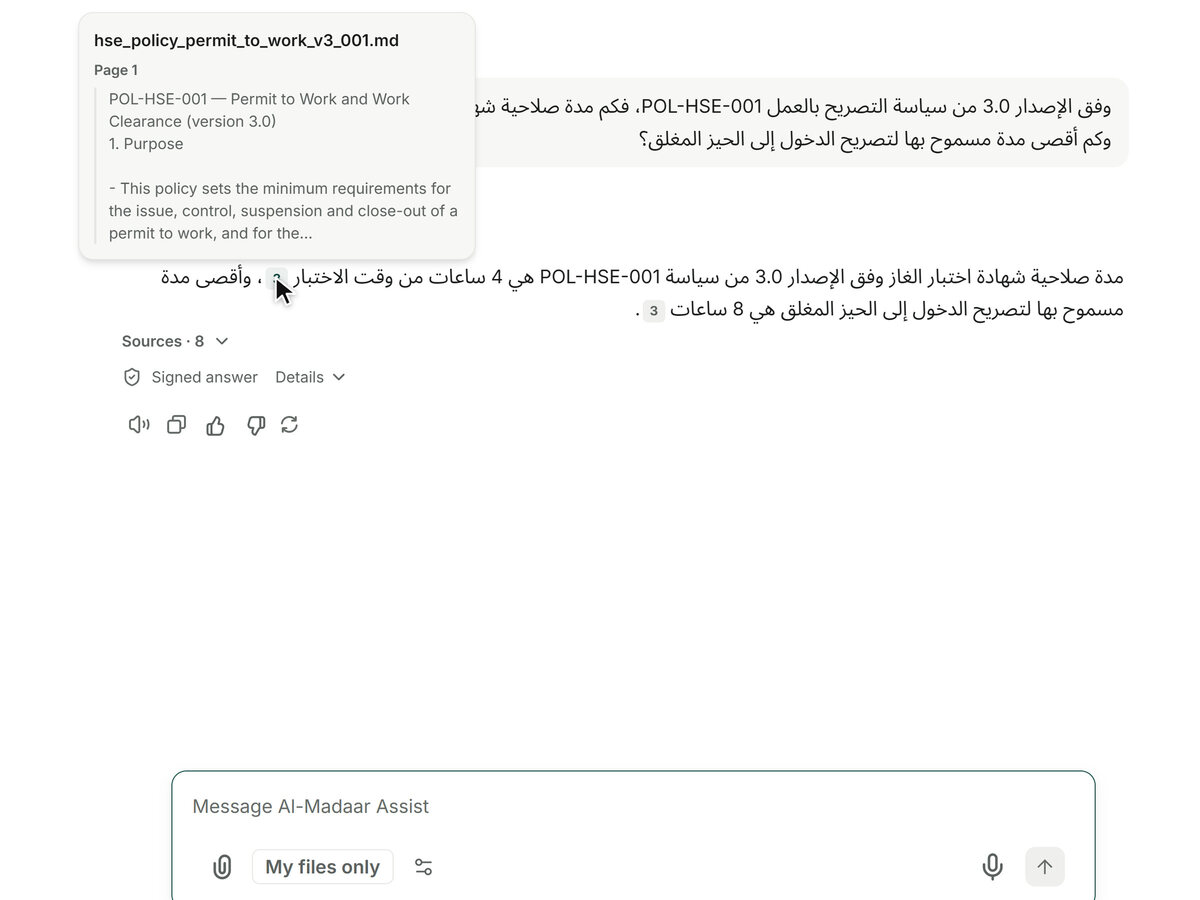
An Arabic question answered in Arabic from an English document, cited.
Nothing leaves without approval.
Assist is the agent. It does multi-step work across mail, calendar and Jira. In the demo, all three run on local test servers.
- Before anything leaves the deployment, it shows an approval card with exactly what will be sent.
- Declining skips the step, and nothing is sent.
- Every decision is recorded in the audit log.
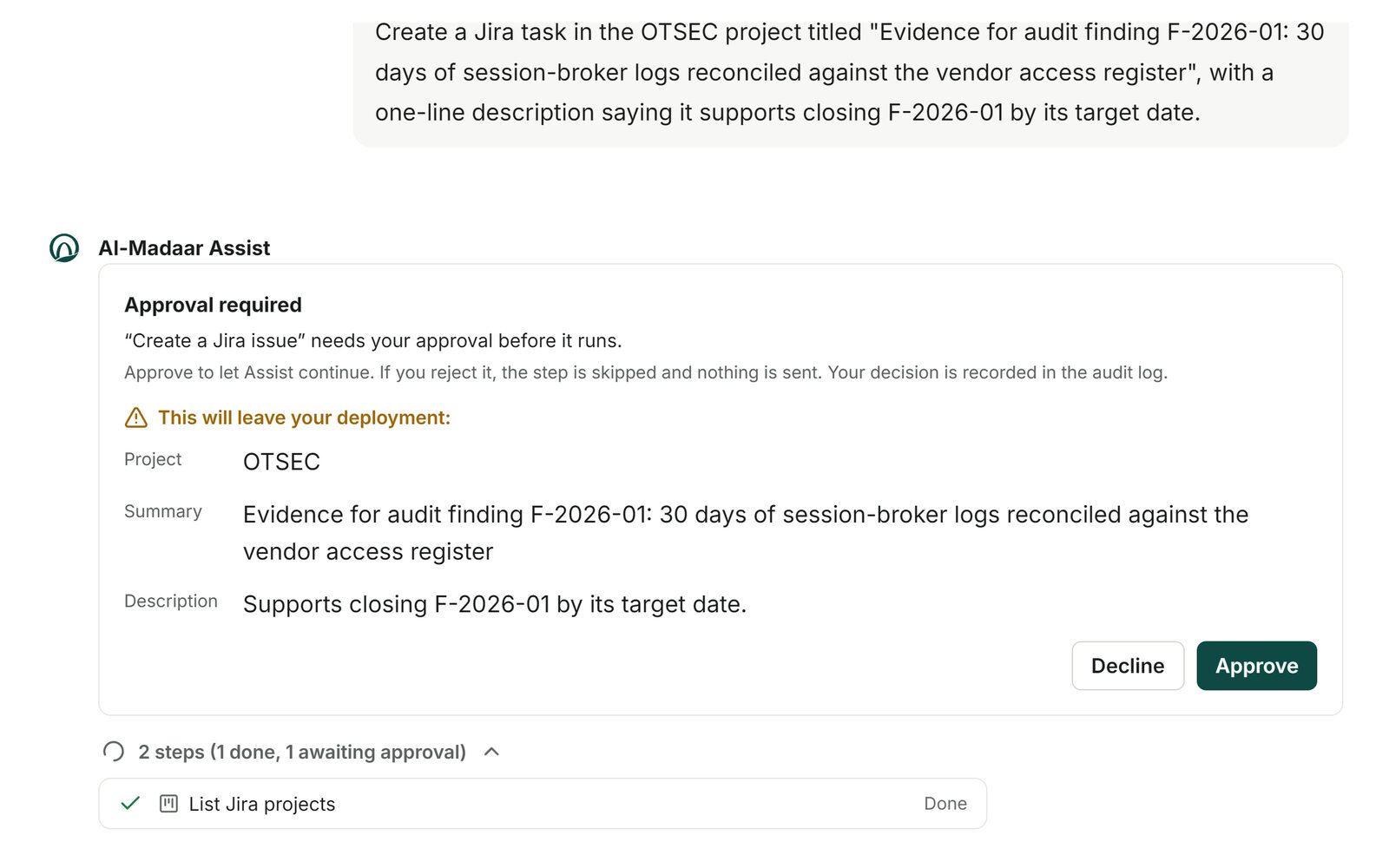
Assist stops and shows exactly what will leave. The Jira server here is the demo’s local test server.
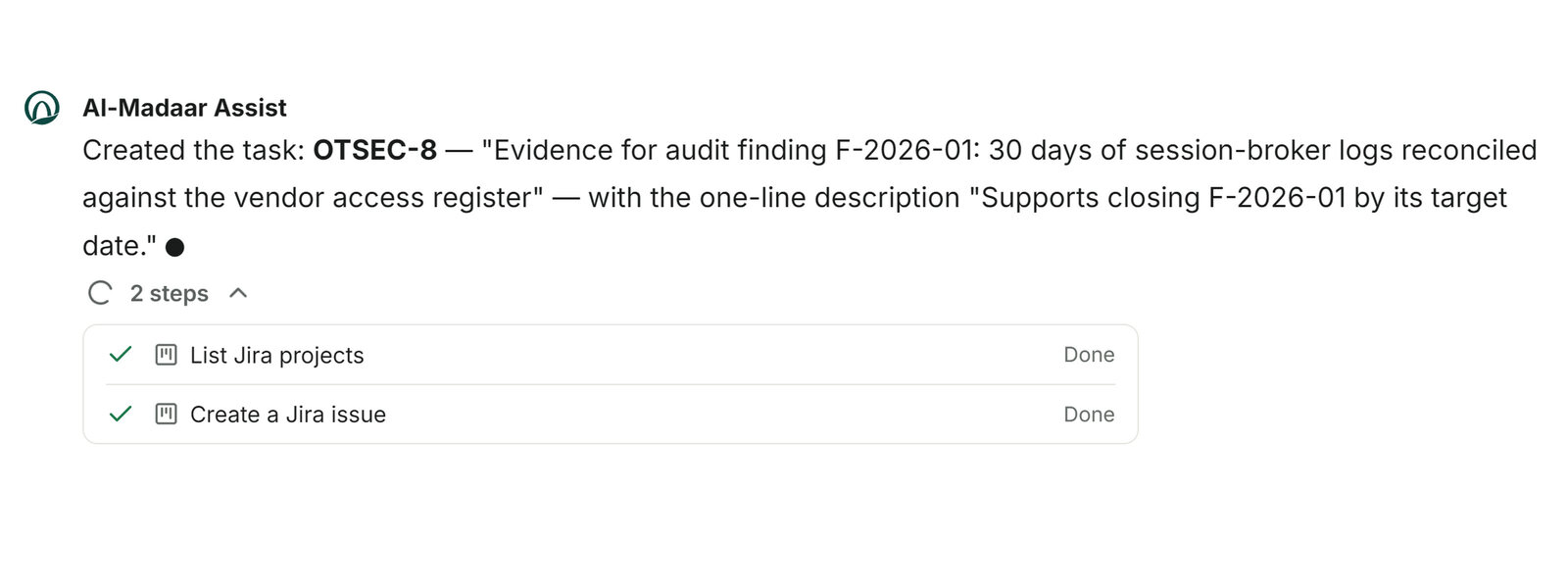
After approval: “Created the task: OTSEC-8.”
It learns. People decide what it keeps.
After a task, Assist saves the steps as a reusable skill the employee can retire, and asks before it remembers a fact.
- Skills and memories are scoped by permission, reviewed and audited.
- The learning loop builds on the open-source Hermes Agent by Nous Research (MIT licence). The multi-user permissions, review and audit are ours.
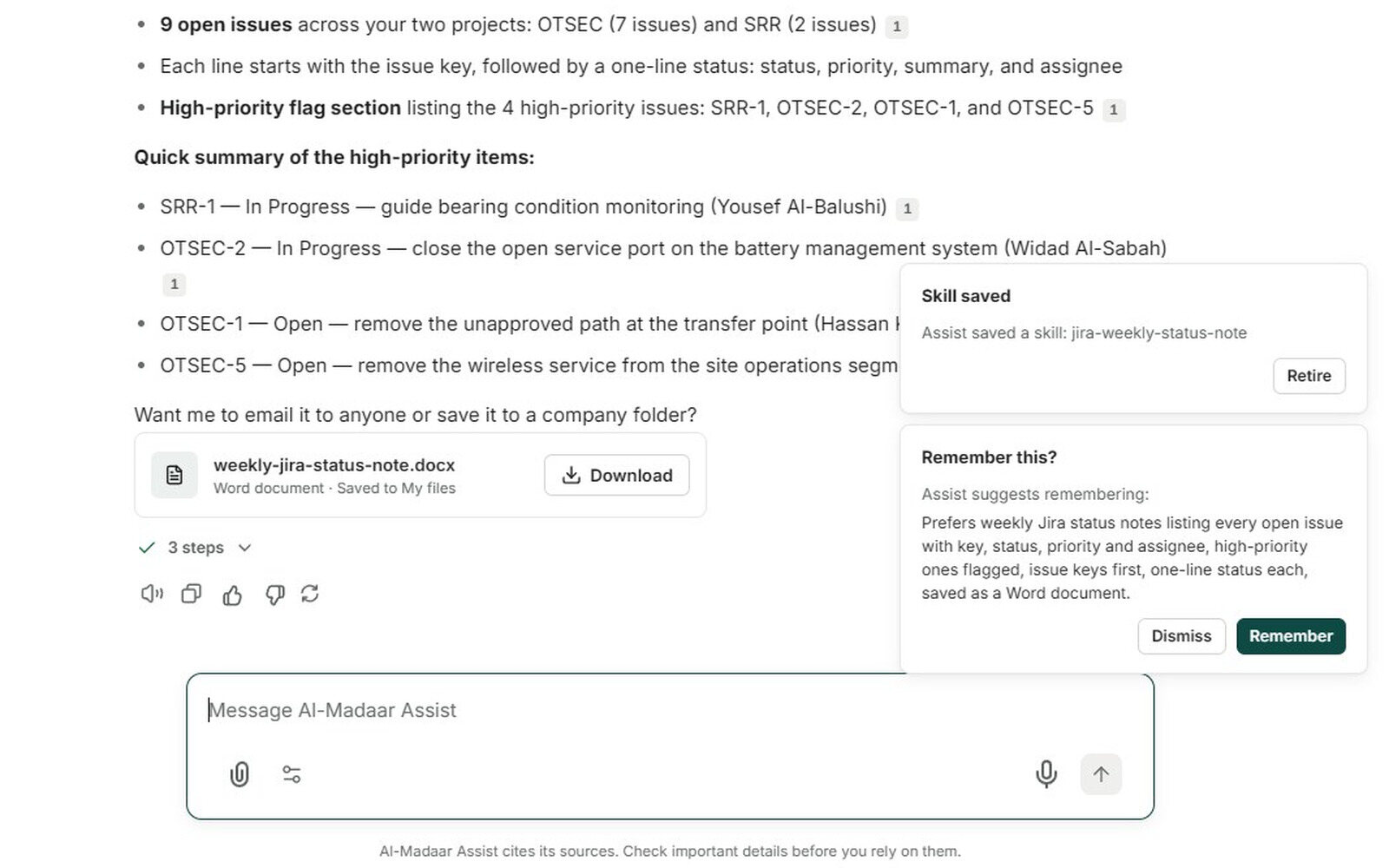
A skill saved, a memory suggested. The employee decides.
Their brand. Their language.
The customer's name, logo and colours on the sign-in page and every screen, set from an admin Branding panel with no redeploy. The “Powered by Ouroboros OS” credit can be turned off.
- Single sign-on through authentik, with SCIM user sync. authentik is built to federate with Active Directory, LDAP or Entra; that is not yet tested against a live customer directory.
- Roles and departments.
- An audit ledger for every answer, approval and admin change.
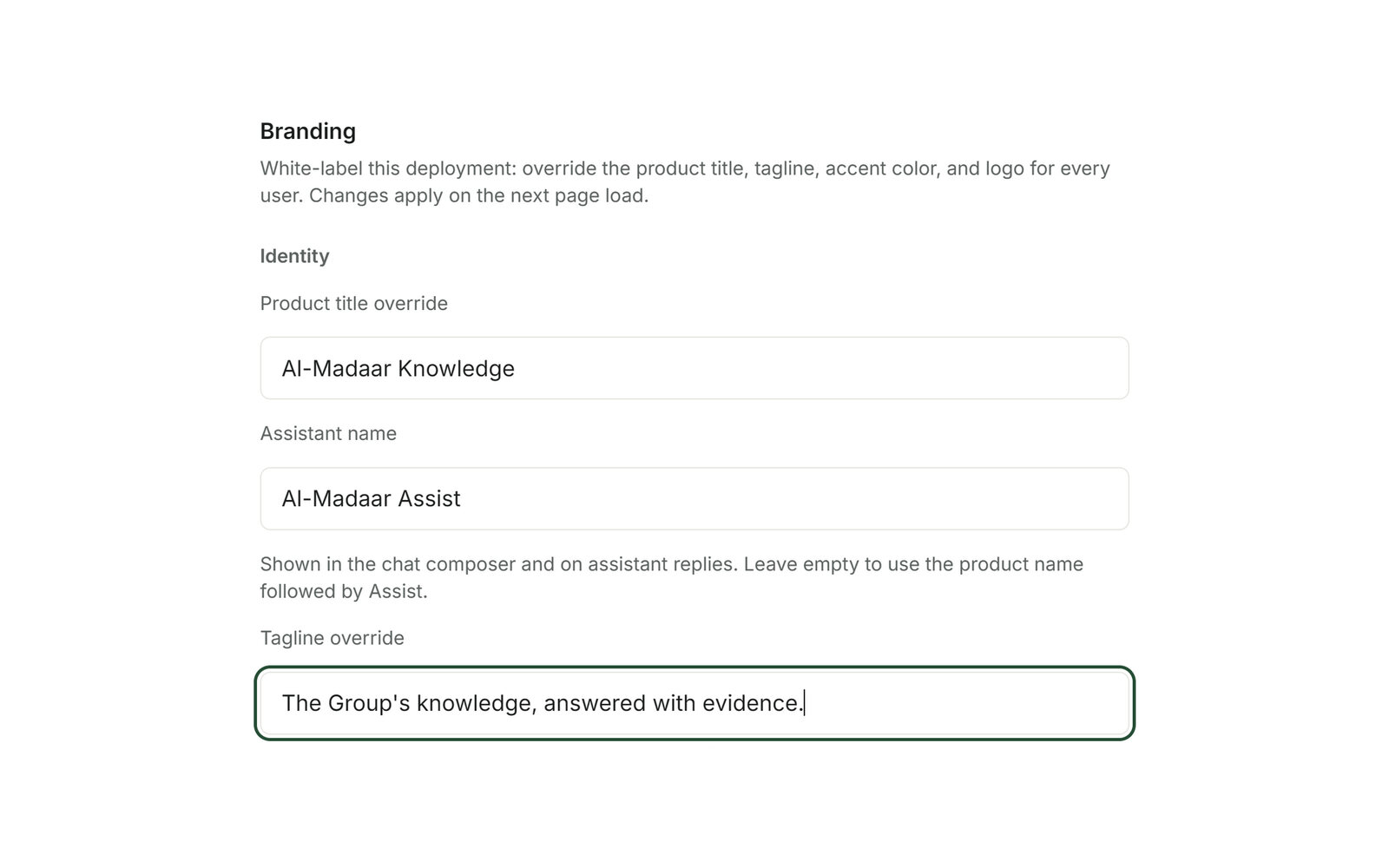
Branding changes apply on the next page load, with no redeploy.
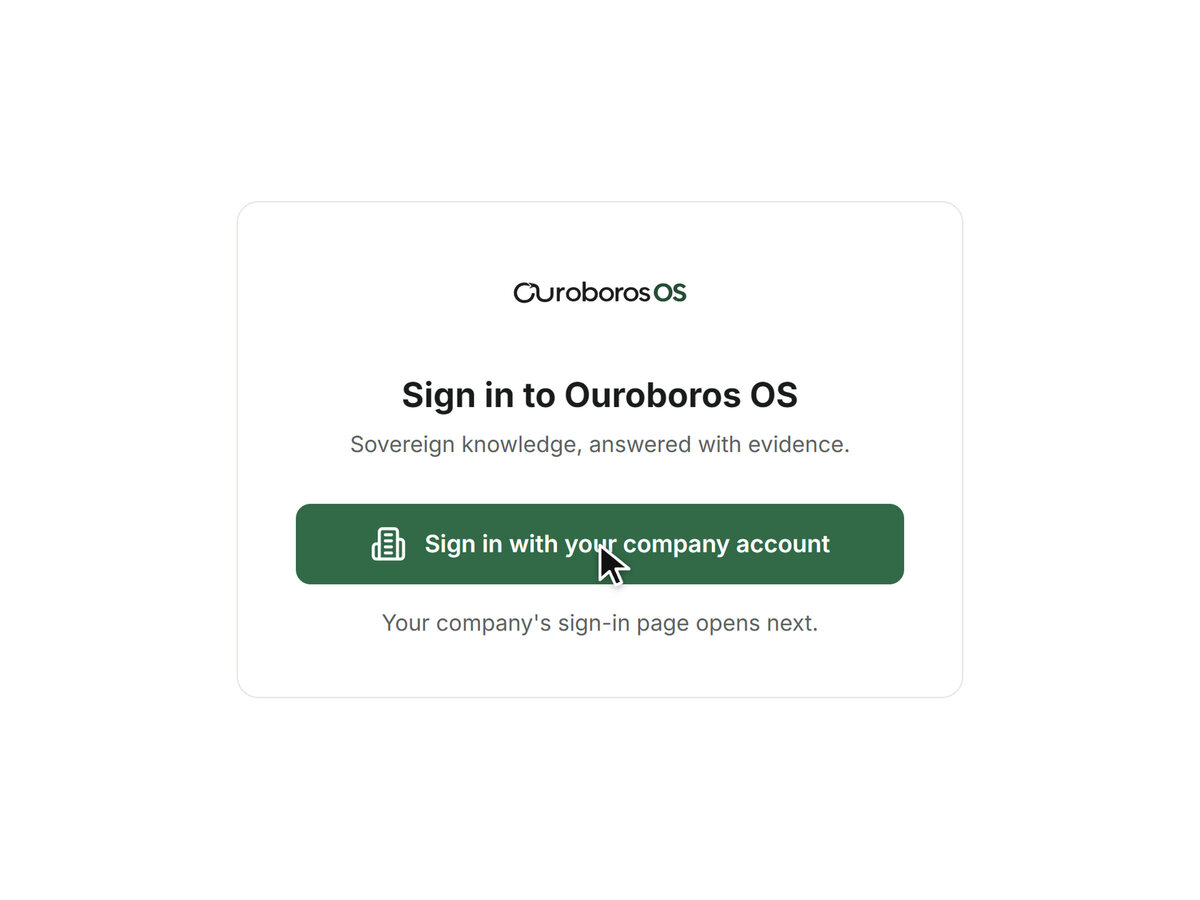
Sign-in, before the rebrand.
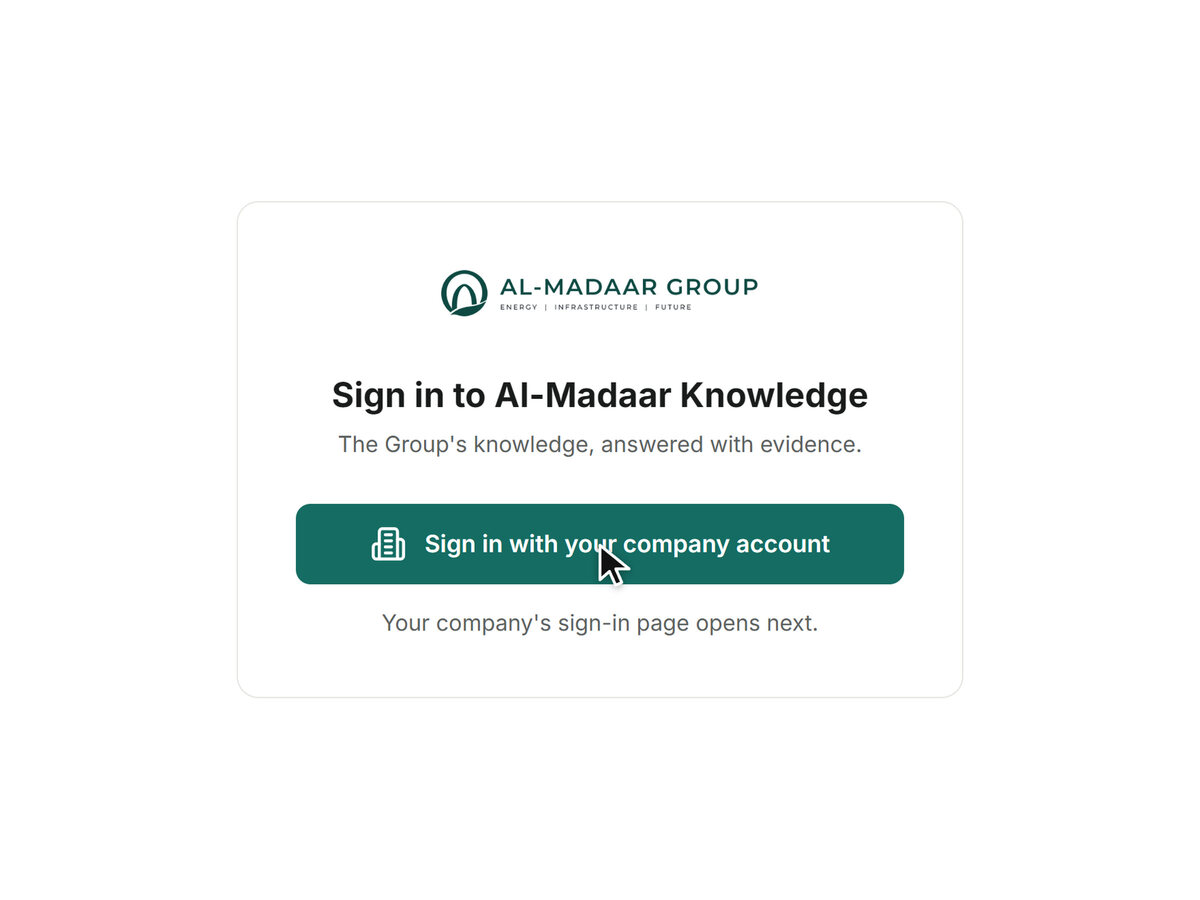
After: the customer’s name, logo and colour.
Product stills show a fictional demo company.
One box, your building.
Everything above is built to run on a single box, served locally. The models make no cloud calls; the only outside connections are connectors an admin chooses to turn on.
- Target hardware
- One 128 GB-class box (NVIDIA DGX Spark class) for most sites, or a workstation with a 96 GB RTX PRO 6000. A GPU server for larger sites.
- Models
- Our Sayqal models, served locally on the box: llama.cpp today, vLLM planned for DGX Spark-class hardware. Meet Sayqal
- Network
- Built to run fully air-gapped. Identity, retrieval, models and the audit ledger all run inside the deployment.
- Identity
- Single sign-on through authentik, with SCIM user sync. Built to federate with Active Directory, LDAP or Entra; not yet tested against a live customer directory.
- Retrieval
- Permission-filtered search over a Qdrant vector store with bge-m3 embeddings, plus keyword search and OCR for scanned documents. A knowledge graph is built alongside; using it to expand answers is not switched on yet.
- Languages
- Arabic and English. Arabic is fully right-to-left, and Arabic questions get cited answers from English documents. English questions about Arabic-only documents don't work yet.
- Audit
- A ledger for every answer, approval and admin change. How it's secured
See it answer, act and sign.
A live walkthrough on a fictional demo company with 457 documents and six employee personas.